Hidden Costs Buyers Forget While Booking an Apartment in 2026
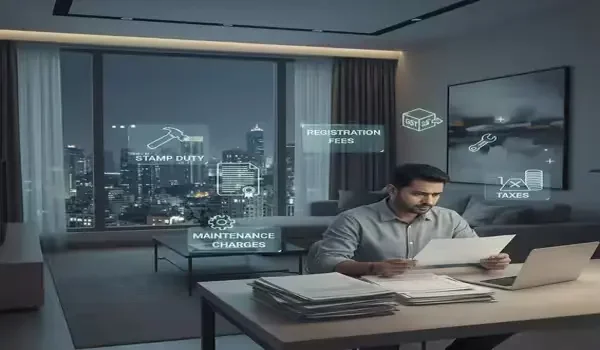
The base price of an apartment in 2026 is usually not the final amount paid. Along with the booking amount, there are government taxes, builder charges, and maintenance fees. These extra costs can increase the total budget of a flat by about 20% to 25%. It includes GST, stamp duty, Preferential Location Charges (PLC), and utility or electrification fees. Knowing about these extra costs before helps in planning the overall budget more clearly. Knowing about these extra costs early helps in planning the overall budget more clearly. Ignoring them can cause big financial problems when you take possession of the apartment.
Before making a decision, here are a few hidden costs that buyers often miss in 2026.
Mandatory Statutory Charges and Taxes in 2026
In 2026, buying a property means understanding the mandatory costs clearly. These statutory charges are often the biggest reason why the quoted price of a flat is much lower than the actual cost buyers pay.
- Stamp Duty and Registration Fees
Stamp duty is a state tax on property, usually 5% to 8% of the flat’s market value. Some states give 1%–2% discount to women buyers. Registration fees in major cities like Bengaluru have increased from 1% to 2% recently. These taxes are based on the higher value between the agreement price and the government’s guidance value. Buyers should budget an extra 7%–10% of the property value to cover these costs.
- GST on Flat Purchase
GST depends on whether the flat is under-construction or ready-to-move-in.
Under-Construction Flats
- GST is 5% for standard flats
- For affordable flats (under ₹45 Lakhs), GST is 1%
- Input Tax Credit (ITC) does not apply
Ready-to-Move-In Flats (RTMI)
- Flats with Completion Certificate (CC) or Occupancy Certificate (OC) are treated as a sale of property, not a service.
- 0% GST applies, which can make RTMI flats cheaper overall, even if the base price is higher
- Legal Verification and Documentation Fees
Legal and Documentation Fees are not government taxes but are important to protect a high-value property purchase.
- Title Due Diligence: A lawyer verifies the mother deed, Encumbrance Certificates (EC), and RERA compliance. The cost is usually ₹15,000 to ₹50,000.
- Drafting Charges: Covers the preparation of the Sale Agreement and Sale Deed. In 2026, with platforms like Kaveri 2.0, these fees also include online document uploads and biometric appointment handling.
Builder Add-ons – Why the “Base Price” Isn’t Everything
In 2026, the Base Selling Price (BSP) of an apartment usually covers only the basic structure and livable space. Extra costs for builder add-ons must be considered for apartments in preferred locations or with special features.
- Preferential Location Charges (PLC)
PLC is an extra charge for apartments with better location or features in the same building. In 2026, PLC is based on market demand and RERA transparency rules. Common PLC Examples:
- East-facing or Vastu-compliant units
- Corner apartments with more ventilation
- Units facing parks, pools, or green zones
It is calculated per square foot. It can add ₹100 to ₹500 per sq. ft. to the total bill.
- Floor Rise Premium
In high-rise buildings, the price goes up as the floor gets higher. Builders usually pick a base floor (like the 1st floor). For every floor above that, the price increases. It usually costs ₹20 to ₹80 extra per sq. ft. for every floor. Higher floors have less noise, better air, and more sunlight, which is why they are more expensive.
- Car Parking Charges
Every apartment needs a place for a vehicle, but this is almost never free. A dedicated slot in the basement or stilt area is sold as a "right to use." A single parking spot in 2026 typically costs between ₹3 Lakhs and ₹6 Lakhs. The parking slot number must be written in the Allotment Letter and Sale Agreement to make it legal.
The Possession-Day Bill
The possession-day bill lists all payments required before moving into a new home. These costs are separate from the flat price and are used to start the building’s services and maintenance.
- Maintenance Corpus Fund and Sinking Fund
The corpus fund is a large pool of money collected from all flat owners. This money is used for big future repairs, like painting the building or fixing the lifts. The sinking fund is a small part of the money saved for emergencies. Builders usually ask for 1–2 years of maintenance in advance, costing between ₹50,000 and ₹2 Lakhs.
- Utility Connection Charges
The Utility Connection Charges cover electricity and water connections for each flat. Electricity charges pay for meters, transformers, and wiring (BESCOM, TSSPDCL). Water and sewage charges connect the flat to the city’s pipes and drains. There may also be a power backup (DG) fee for the generator during outages. These fees usually total ₹1 Lakh to ₹3 Lakhs.
- Clubhouse and Amenity Membership Fees
The Clubhouse and Amenity Fees cover access to the gym, park, and swimming pool in most townships. A one-time membership fee allows use of the society’s clubhouse, while part of the monthly maintenance goes toward cleaning and upkeep of amenities. In 2026, these fees often range from ₹1 Lakh to ₹5 Lakhs in luxury projects.
Post-Possession Expenses
After getting the keys to a flat, the financial work is not over. Owners need to plan for post-possession expenses to make the home livable and legally registered. These costs usually come right after possession.
- Interior Fit-outs and Furnishing – The 10–15% Rule
Most flats come as bare shells with basic flooring and paint, so extra money is needed to make the home usable. About 10%–15% of the property value should be set aside for interiors. For example, a flat costing ₹1 Crore may require ₹10–15 Lakhs for things like a modular kitchen, wardrobes, lighting, ceiling fans, and bathroom fixtures. In premium projects, extra spending may go toward premium veneers, automated lighting, and custom woodwork to match the building’s luxury standards.
- Society Formation and Khata Transfer Charges
After the builder gives the keys, the owners need to form a Residents Welfare Association (RWA) to manage the building. Each owner pays a small one-time fee to register the society. In cities like Bangalore, the Khata (property tax record) must also be changed from the builder’s name to the owner’s name. Some owners take help from a legal consultant for the paperwork and office visits. These final steps usually cost around ₹10,000 to ₹30,000 per flat. For projects like Century Tisora, these final steps usually cost between ₹10,000 and ₹30,000 per flat.